
PUMPS OVERHAULING
Pumps Overhauling
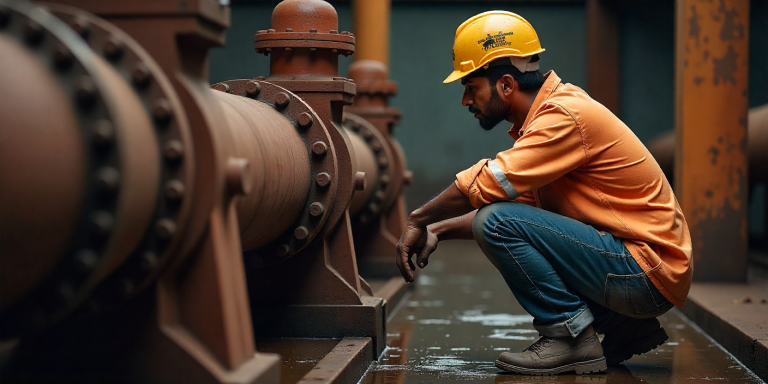
Pumps are overhauled to restore them to optimal operating conditions, and this process varies depending on the pump type and its function within a power plant. Overhauling procedures are specific to each pump type, addressing their unique working mechanisms and failure modes. Common pump overhauling procedures involve restoring impeller balance, replacing wear components, shaft repair, sealing internal clearances, and ensuring proper lubrication for pumps like boiler feed pump, cooling water, and condensate Extraction pumps.
The Overhauling Process
The fundamental goal of overhauling is to restore a pump’s performance by addressing wear and tear.
1. Disassembly and Inspection:
The pump is carefully taken apart, and all components are cleaned and inspected for wear, damage, or corrosion.
3. Wear Component Replacement:
Worn or damaged parts like seals, bearings, shaft sleeves, and wear rings are replaced to restore original efficiency and prevent leaks.
5. Lubrication System Check:
The lubrication system for bearings and seals is inspected, cleaned, and restored to ensure proper operation.
7. Testing:
After reassembly, the pump undergoes rigorous testing to ensure it meets its performance requirements before being returned to service.
2. Impeller/Rotor Maintenance:
• Balancing: For centrifugal pumps, the impeller is balanced to prevent vibration and extend bearing life.
• Re-sizing: For some positive displacement pumps, impellers or rotors might need resizing to maintain proper internal clearances.
4. Internal Clearance Adjustment:
The internal clearances between the impeller and casing, or between the rotor and stator in some positive displacement pumps, are adjusted to their specified limits.
6. Reassembly:
The pump is reassembled to exact specifications.